Tíbia is one of the longest-running classic MMORPGs on the market—approaching thirty years of continuous operation, with developer CipSoft still actively rolling out updates. Despite the passing decades, its foundation remains unchanged: it is a two-dimensional game set in an oblique/isometric-style projection, built on a tile-based world and pixel sprites.
At the same time, anyone comparing screenshots from the turn of the century with the modern Tibia client immediately notices a clear evolution: richer details, smoother transitions, more elaborate visual effects, and better depth separation, even though the core of that 2D look still strongly evokes “good old Tibia.”
Medivia custom server looks better than original Tibia?
A widely discussed article on the Polish gaming portal MMORPG.org.pl (“Medivia already looks more modern than Tibia”) captures a tension that has accompanied the community for years: veterans crave nostalgia and classic readability, while expectations for visual presentation in 2D games continue to rise. This topic frequently surfaces in community discussions—on forums like Wykop e OTLand—where players compare Tibia’s official development, servers modeled on older versions (such as 7.4), and projects that opted for completely custom artwork.
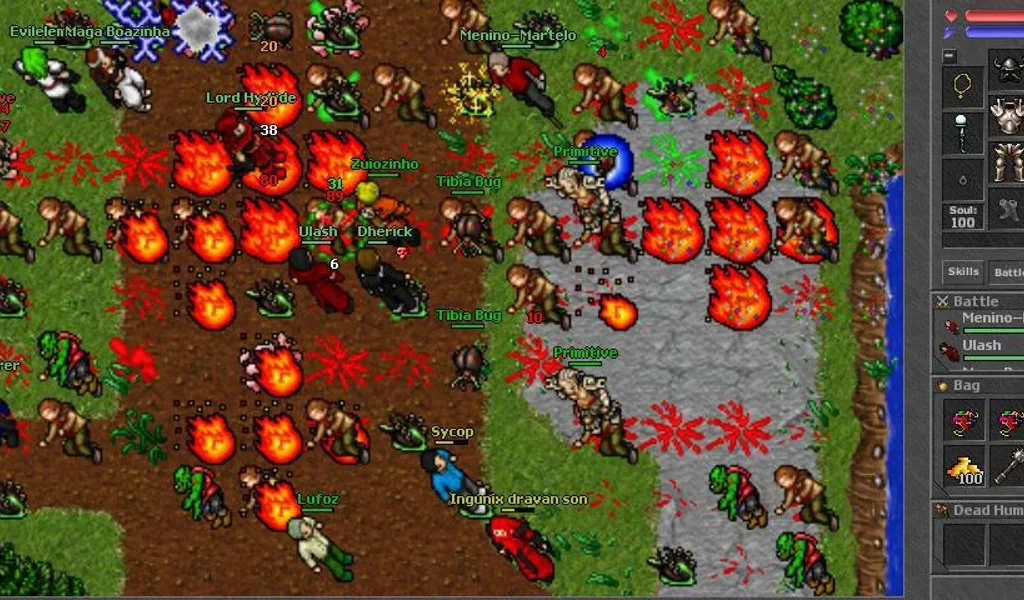
Why Tibia’s Graphics Still Look Familiar Yet Have Clearly Evolved
Official Tibia never abandoned its two-dimensional nature for full 3D because 2D defines its pacing, crowd readability, combat flow, and map design. Instead, the changes happened within that established format:
- · More detail and texture: Early, stark tiles gave way to more refined surfaces, shading, vegetation, and architecture that convey depth without sacrificing battlefield clarity.
· Fluidity and effects: Animations, spells, and user interface elements are far more sophisticated today than in the game’s early years, while still preserving tile-based movement and interaction logic.
· Identity despite change: Even after years of updates, the game retains its unmistakable “2D skeleton”—immediately recognizable in its grid layout, perspective, and the way items and characters are displayed.
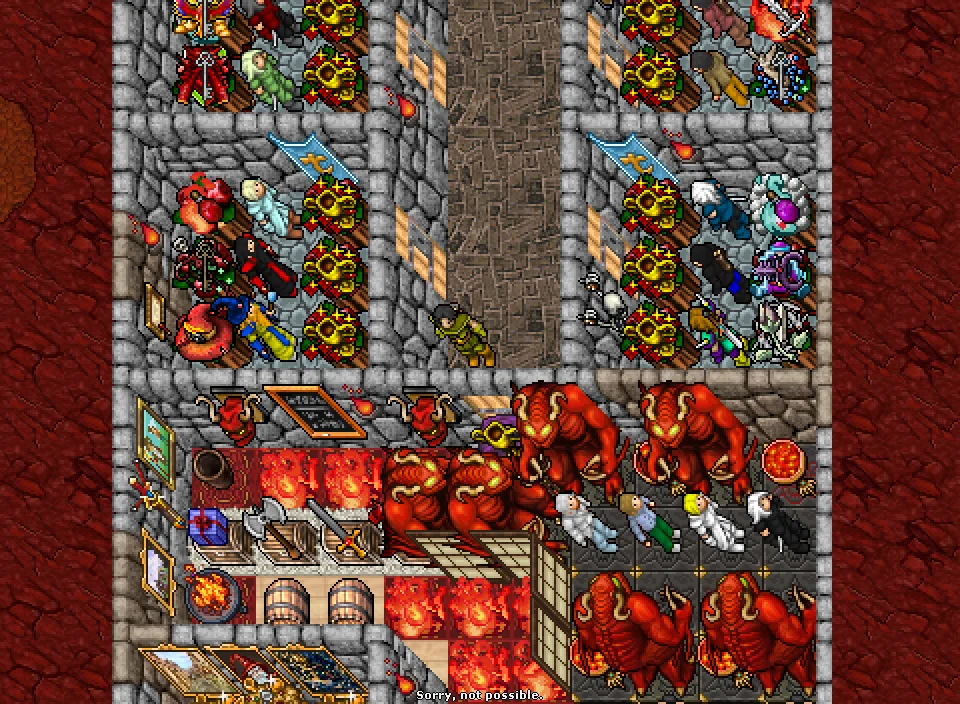
Medivia and Custom Servers: A Complete Visual Overhaul
The most intriguing phenomenon alongside official Tibia is the rise of custom servers (often built on OpenTibia engines or custom clients) that go far beyond tweaking experience rates or adding new quests.
Medivia is one of the most prominent examples of this approach. Although historically rooted in the atmosphere of older Tibia versions (7.4) with its own game world, over the years it has undergone a profound visual transformation—introducing original artwork, updated sprite packs (including HD variants), and its own distinct art direction. Within the community, this sparks lively debate: some players praise the modern, cohesive aesthetic and fresh environments, while others miss the classic sprites of older eras.
A similar trend can be seen across the broader ecosystem of custom projects built on Tibia / OpenTibia architecture:
· Servers with custom sprite packs and proprietary clients: Creators frequently replace classic sprites with original asset sets (such as new monsters, equipment, walls, and visual effects), using custom editors and clients to give their game a unique identity.
· Projects with entirely new themes and mechanics: Community hubs like OTLand e Tibia.net.pl regularly showcase custom servers featuring original crafting systems, dungeons, naval battles, mythological settings, or browser-based clients—using the classic 2D foundation as a canvas for an entirely different world.