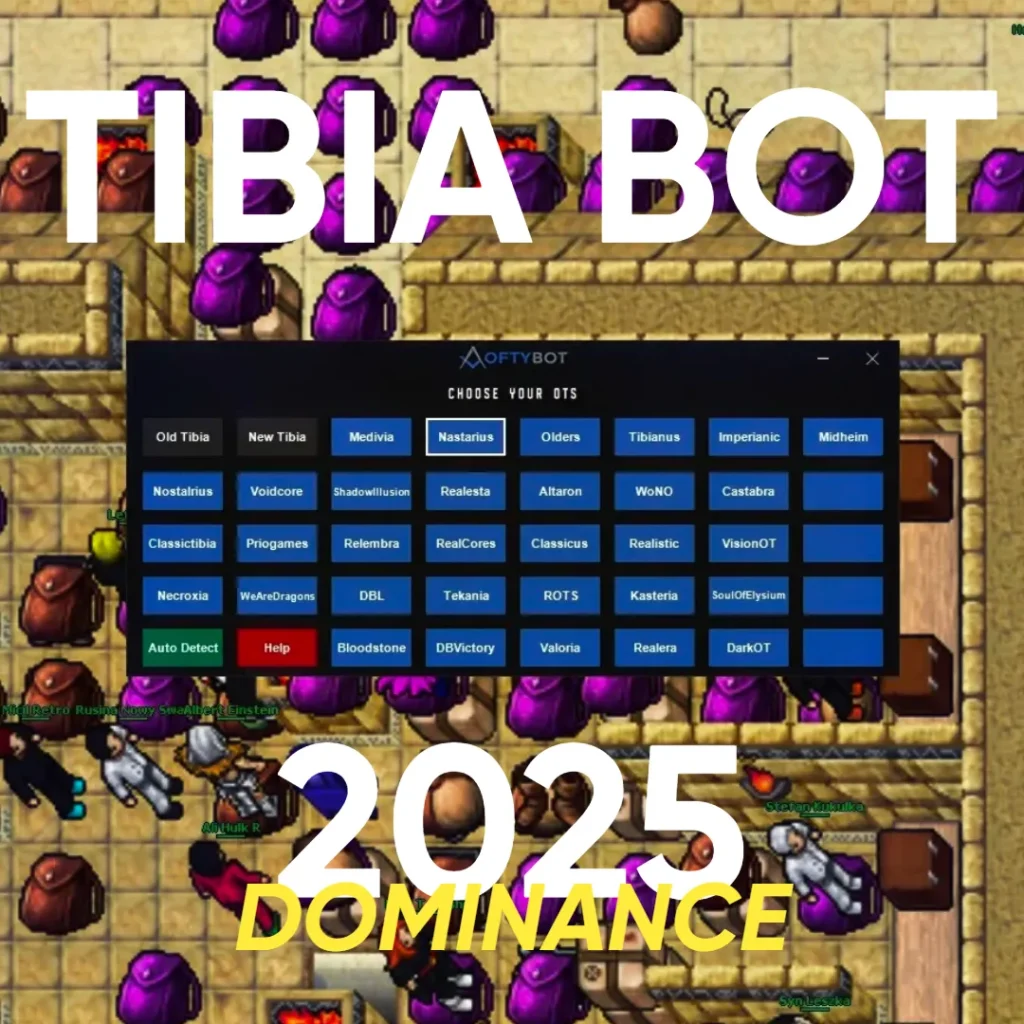
The last years in Tibia have brought not only new monsters, quests, and mechanics, but also a complete evolution in the tools that assist players.
In 2025, tibia bots are no longer primitive auto-hunt scripts – they’ve become intelligent systems capable of adapting to the game’s dynamic world. Players now expect fast, easy-to-configure, and smart solutions – without spending hours fine-tuning every single detail.
What’s Changed in last years?
- Dynamic hunting grounds and events – monster spawns are less predictable, and raids appear in different locations, forcing bots to adapt on the fly
- New progression systems – such as Weapon Proficiency, which requires changing hunting styles and selecting weapons based on enemy type
- Greater focus on mobility – players want tibia bot that can run multiple characters and clients
Features players look for in 2025
- Adaptive cavebot – set a route in minutes, and the bot automatically adjusts it when obstacles appear or the map changes
- Intelligent monster detection – analyzing not just the battle list, but also animations and visual effects to react faster to threats
- Auto-imbuing and gear management – automatically renewing imbuements, switching weapons for specific monster types, and replenishing ammo
- PvP reaction systems – instant escapes, outfit changes, and alerts when enemies are nearby
- Integration with new game systems – for example, automatically farming weapon proficiencies in optimal locations
How modern bots work – Behind the scenes
Memory reading/writing bots
Read and write data directly in the game’s process memory, giving instant access to player position, HP, mana, battle list, and map data.
- Pros: lightning-fast reaction, precise data.
- Cons: higher detection risk from anti-cheat systems
Pixel/OCR bots
Analyze the game screen (colors, pixels, text) and make decisions based on what they “see.”
- Pros: harder to detect since they don’t touch the game process.
- Cons: slower, more prone to errors if the interface changes.
Best bots in 2025 of course use both methods. Using best things from them providing best results.
Core Bot Modules
- Cavebot – in 2025, it can avoid obstacles, respond to spawn changes, and learn routes based on the player’s style.
- Targeting – prioritizes targets by XP/min, loot value, or threat level; can identify monsters by their attack animations.
- Refiller & Depositer – automatically restocks supplies and deposits loot.
- Anti-detection systems – randomizing reaction times, mouse movements, and walking paths; “low profile” mode to avoid repetitive patterns.
Trends in 2025 and in future
- Hybrid bots – combining memory reading with pixel detection to balance speed and safety
- Multi-client support – running several characters at once with minimal CPU/RAM usage
- AI integration – basic machine learning models predicting monster or player behavior (Its gonna be more and more AI based function in bots. Especially in games like Tibia where many mechanics are reapetable)
- Plug-and-play scripts – ready-made profiles for popular hunting spots, launched in under a minute (People do not want to configure bots spending hours)
- Simulating humans – this was seen 10 years before even but now they make mistakes on purpose and there are sophisticated, enlarged functions to simulate humans behaviours
- Detection in many areas – bot must be aware of monsters in screen but about spell effects, minimap, battlelist and more. There is many detection mechanisms needed.
If you’re looking for a powerful Tibia Bot, check out LoftyBot.
Powerful tibia automation tool chosen by players around the world.
Get your Tibia Bot LoftyBot now!